

Keeping our nation's emblem flying high and proud is a privilege and a responsibility. At Old Glory Flagpole & Rescue, we understand that a well-maintained flagpole is a symbol of enduring spirit and community pride. From the majestic large flag pole proudly gracing a community center to the humble residential model, each component plays a vital role in its longevity and the dignified display of your flag. Understanding these parts is the first step towards ensuring your flagpole stands tall and strong for years to come.
The Foundation and the Mast: Stability You Can Trust
The very backbone of your flagpole system is, of course, the flagpole itself, often referred to as the mast or shaft. Most residential and commercial flagpoles are made from aluminum, fiberglass, or steel, each offering different benefits in terms of strength, weight, and weather resistance. Equally crucial is the foundation. For permanent installations, this typically involves a ground sleeve or a base plate securely anchored to a concrete footing. The integrity of your flagpole begins with its proper flagpole installation; a secure foundation prevents leaning and ensures stability against wind and weather. Regularly inspect the base for any signs of shifting or corrosion, as these can compromise the entire structure.
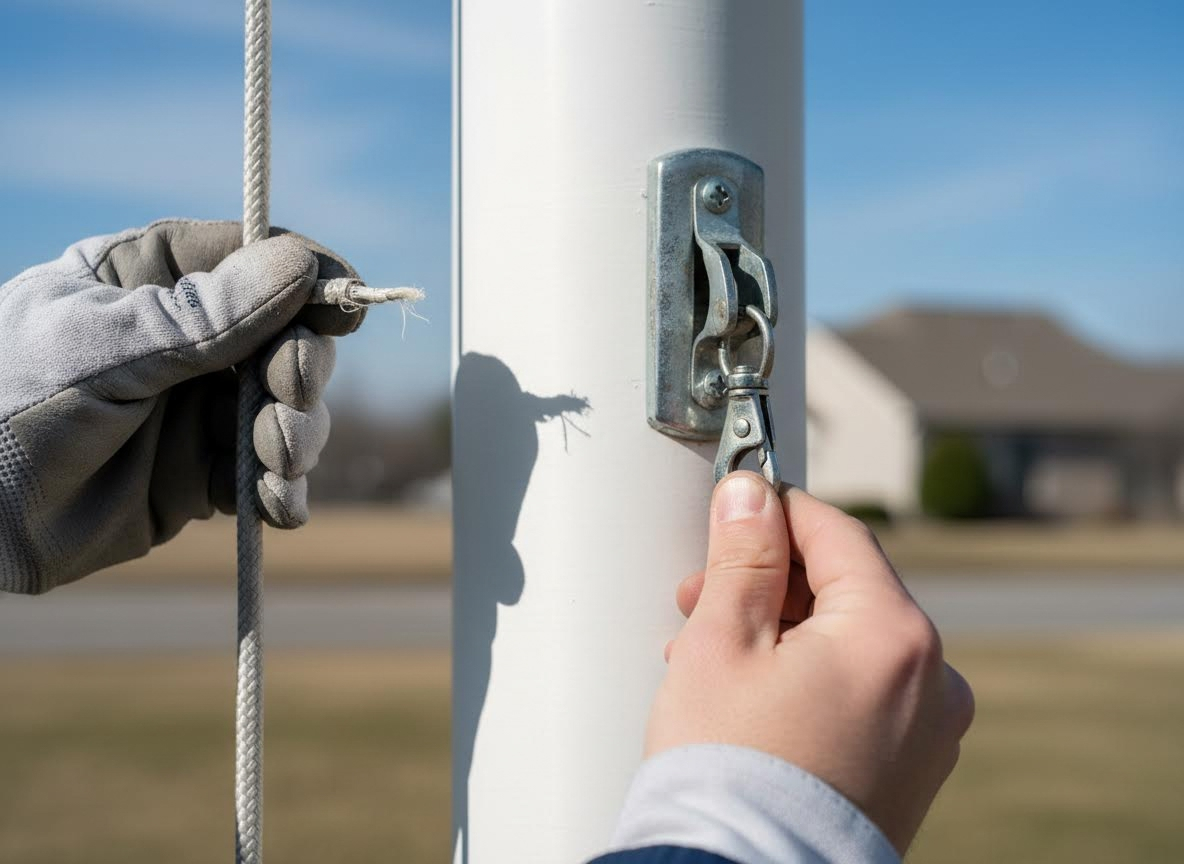
The Working Components: Halyards, Cleats, and Snaps
These are the parts you interact with most directly when raising or lowering your flag. The halyard, or rope, is the lifeline that carries your flag. It's often made of durable braided polyester, designed to resist UV damage and wear. The cleat is the hardware mounted on the flagpole where the halyard is tied off. Snaps, or flag clips, attach the flag to the halyard. Regularly inspecting your flagpole hardware kit, including the halyard (rope), cleat, and snaps, is paramount. Look for fraying on the halyard, ensure the cleat is firmly attached, and check that the snaps open and close smoothly. Worn components can lead to a flag falling or becoming entangled, making timely replacement a key part of responsible upkeep.

The Top Assembly: Truck, Finial, and Illumination
At the very top of your flagpole resides the truck, which houses the pulley system allowing the halyard to move freely. Trucks can be internal, where the rope runs inside the pole, or external, where it's outside. Mounted atop the truck is the finial, often a decorative ball or eagle, which protects the internal workings from weather. For those who wish to illuminate their flag after dusk, a durable light for flag pole is essential. These lights are typically solar-powered or wired, ensuring your flag is always properly lit, as dictated by flag etiquette. When putting up a flagpole, or performing maintenance, remember to check the truck for smooth operation and the finial for secure attachment, as these components are critical for both functionality and appearance.
Caring for your flagpole is a patriotic gesture that ensures your flag can fly freely and honorably. Understanding each part, from the foundational elements to the smallest snap, empowers you to maintain its beauty and functionality effectively. This proactive approach to maintenance not only extends the life of your flagpole but also upholds the dignity of the flag it carries. For guidance on specific component care, or to learn more about professional maintenance and repair services for your flagpole, we encourage you to explore our comprehensive resources.