
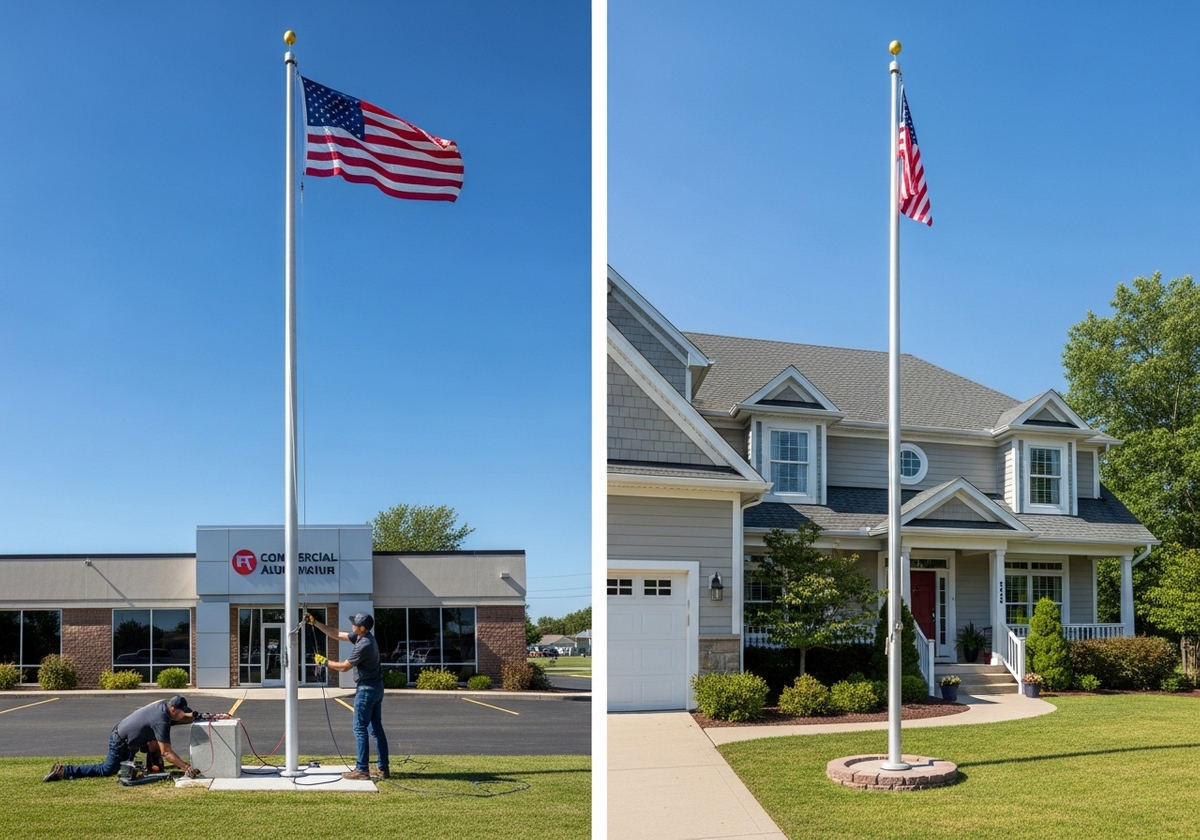
Choosing the right flagpole for your property involves understanding the key differences between commercial and residential models. While both serve the same fundamental purpose – displaying a flag – their structural requirements, installation processes, and long-term maintenance needs can vary significantly. Understanding these differences ensures you select a flagpole that is safe, durable, and appropriate for its intended use.
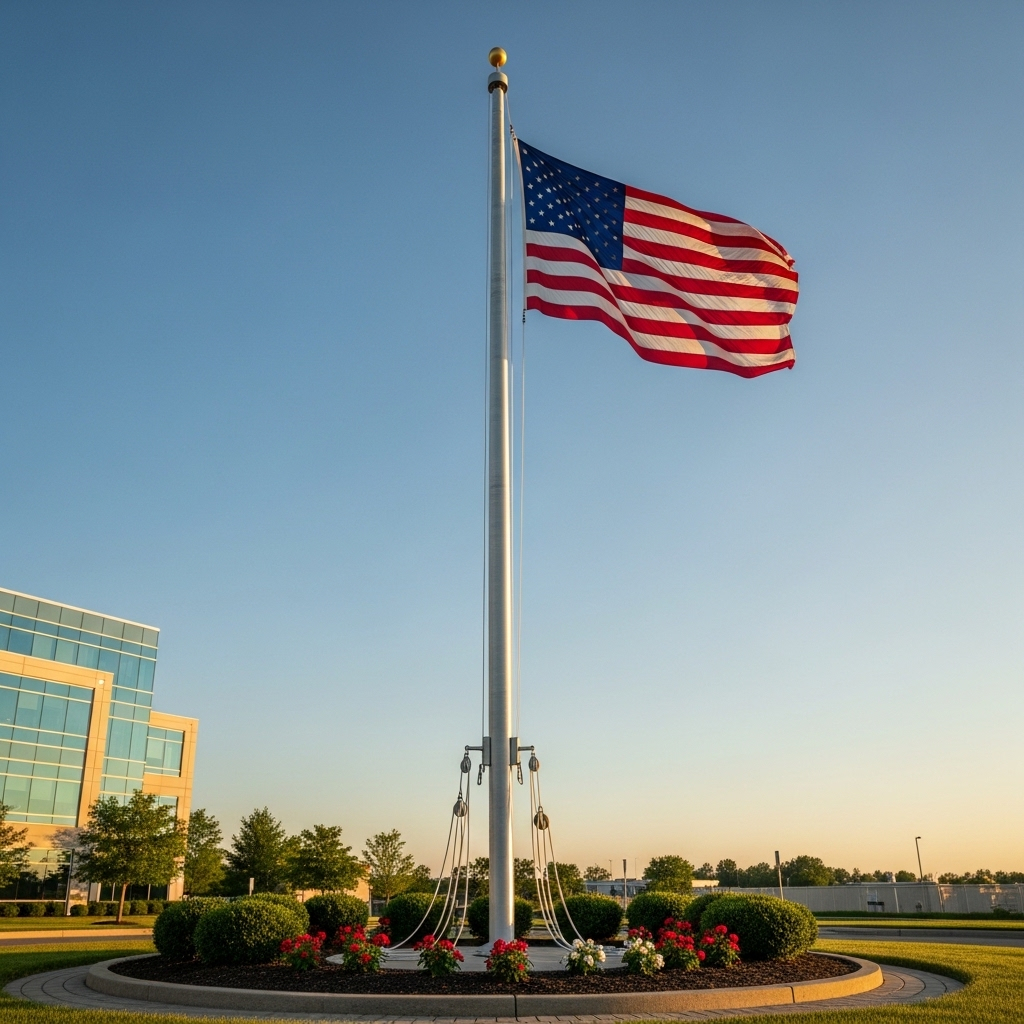
Material and Construction
Commercial flagpoles are typically constructed from heavier-gauge materials like aluminum or steel to withstand the demands of constant use and exposure to various weather conditions. Welding and joining techniques are often more robust, ensuring structural integrity over the long term. Residential flagpoles, while still durable, may utilize lighter-gauge materials and simpler construction methods, designed for less frequent use and milder weather conditions. The finish is also a key differentiator, with commercial poles often featuring advanced coatings for enhanced resistance to corrosion and wear.
Foundation and Installation
Flag pole installation for commercial flagpoles often requires a more substantial foundation than residential ones. This is due to their greater height and the larger flags they are designed to fly. Engineering considerations, such as wind load calculations and soil analysis, are crucial to ensure the pole's stability and safety. Residential installations, while still requiring careful attention to detail, typically involve simpler foundation designs and installation procedures.
Height and Size
Commercial properties often opt for taller flagpoles to maximize visibility and make a statement. These flagpoles can range from 20 feet to well over 80 feet in height, requiring specialized equipment and expertise for installation. Residential flagpoles are typically shorter, ranging from 15 to 25 feet, making them easier to install and maintain.

Load Capacity and Flag Size
Commercial flagpoles are engineered to handle larger, heavier flags that may be flown constantly. The load capacity of the pole, along with the strength of the flagpole parts like the halyard and clips, must be sufficient to withstand the weight and wind resistance of the flag. Residential flagpoles are designed for smaller flags and may not be able to handle the same load. Overloading a flagpole can lead to damage or even collapse, so it's essential to choose a pole that is appropriately sized for the intended flag.
Maintenance and Flagpole Repair
Commercial flagpoles require regular inspection and maintenance to ensure their continued safety and performance. This may include checking for signs of corrosion, tightening bolts, and replacing worn flagpole parts such as the halyard or snap hooks. Flagpole lighting may also require maintenance. Due to the height of commercial flagpoles, specialized equipment and expertise may be needed for these tasks. Residential flagpoles typically require less frequent maintenance, but regular inspections are still recommended to identify and address any potential issues early on.
A flagpole is an architectural feature, not just a decoration. Confusing residential specs with commercial requirements can lead to structural failure under high winds. Don't gamble on wind ratings or foundation depth; trust the experts who know the code. At Old Glory Flagpole & Rescue, we specialize in heavy-duty flag pole installation designed to withstand the elements. From sourcing commercial-grade flagpole parts to performing ongoing flagpole repair, we ensure your business's display is safe and compliant. We can even illuminate your site with high-output flagpole lighting. Contact us today to secure the right pole for your property.